When “Aesthetic” Crosses the Line: A Wedding Conflict That Says More Than It Seems
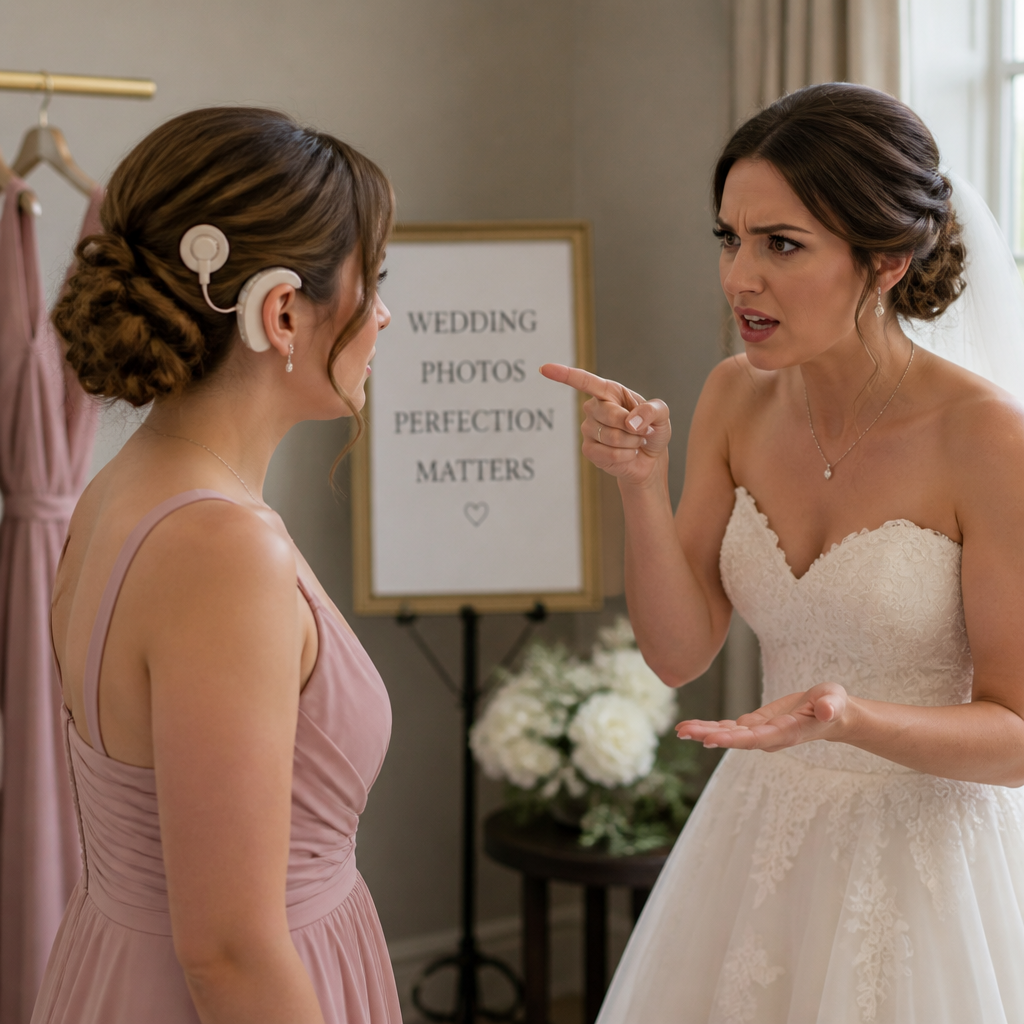
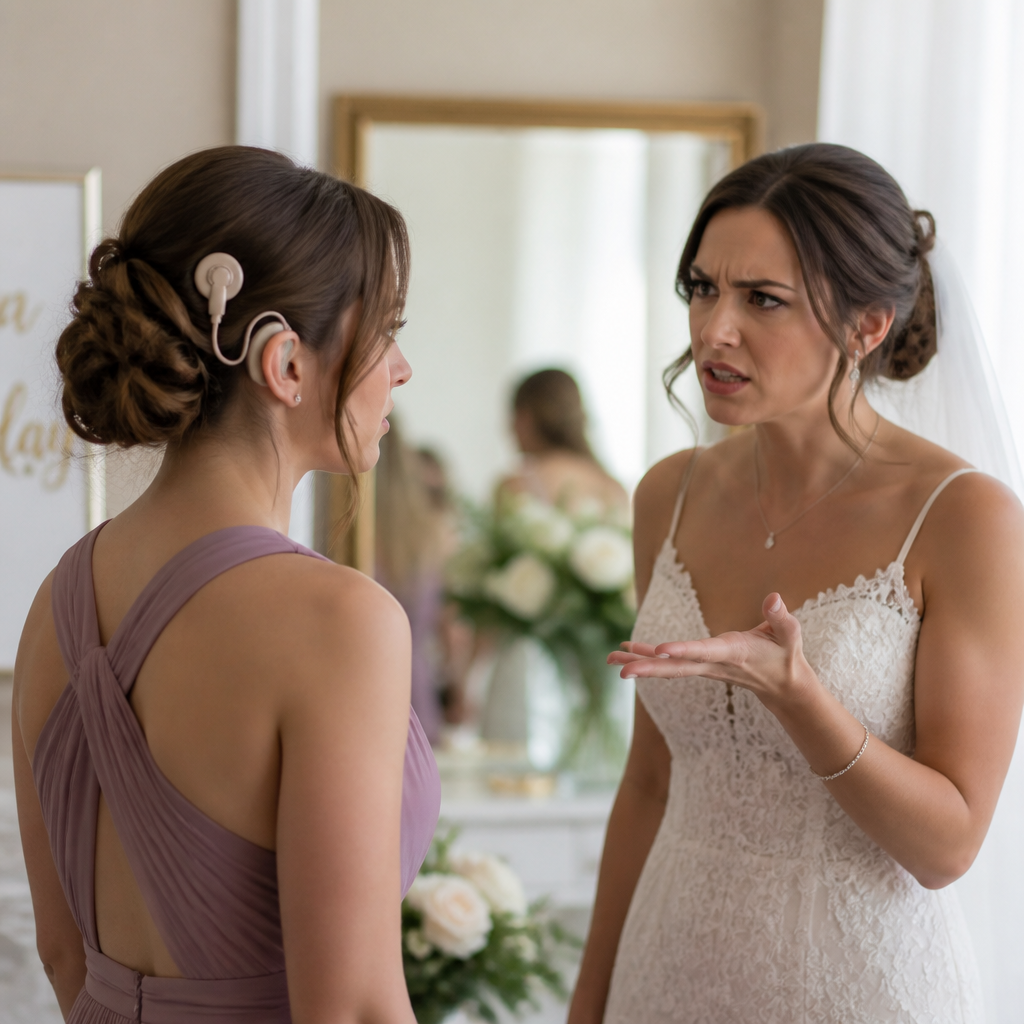
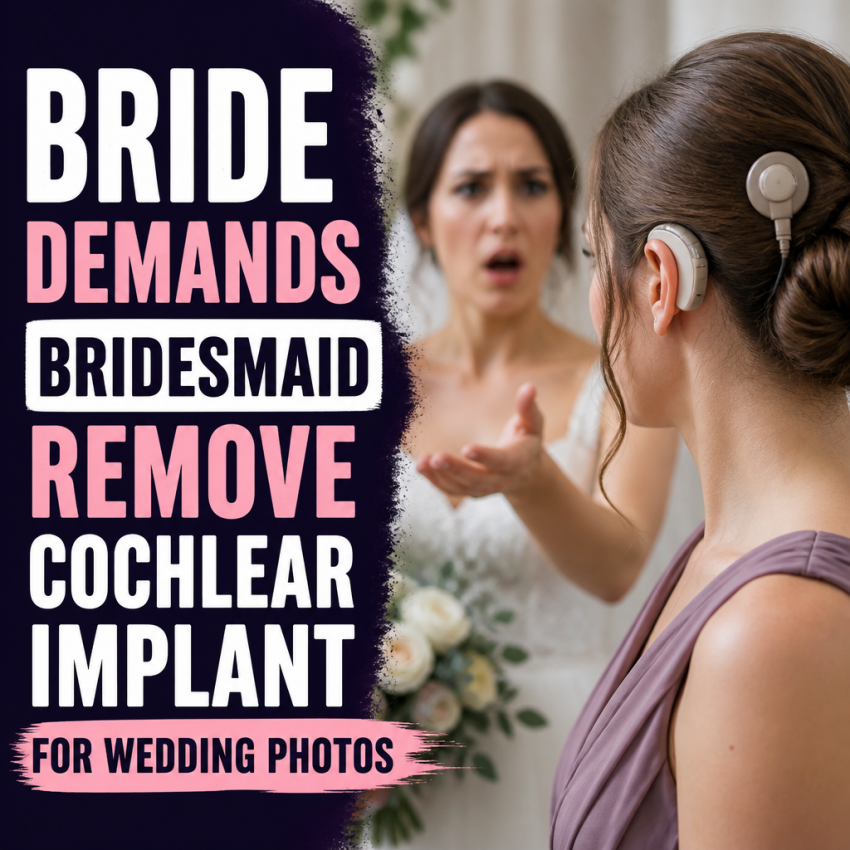
Weddings are often described as a celebration of love, unity, and family. But they can also become pressure cookers for expectations, insecurity, and control. One recent story making the rounds online involved a bride reportedly asking a bridesmaid to remove her cochlear implant because it would “ruin” the look of the wedding photos. What followed was a heated fallout that sparked outrage, sympathy, and a broader conversation about ableism, image, and the difference between a preference and a demand.
At first glance, this may sound like just another dramatic wedding dispute. But the deeper issue is much more serious. A cochlear implant is not a fashion accessory or a removable inconvenience—it is a life-changing medical device that helps a person hear. Asking someone to take it off for pictures is not simply rude; it can be deeply hurtful, demeaning, and unrealistic.
This kind of incident reveals how quickly the desire for a “perfect” event can turn into an attempt to erase a person’s identity. And it raises an important question: when does wedding planning stop being about celebrating love and start becoming about controlling how other people look?
Why This Story Resonates So Strongly
The reason this story struck a nerve is because it touches on several sensitive topics at once:
- Body autonomy
- Disability visibility
- Wedding culture and image obsession
- Friendship boundaries
- Social pressure to appear “perfect”
Weddings are emotional events, and people often become unusually fixated on details like colors, lighting, attire, and photographs. But when those details become more important than a person’s comfort or dignity, the situation stops being harmless.
The request to remove a cochlear implant is especially troubling because it targets something essential to a person’s accessibility and lived experience. It sends a message that the person is acceptable only if their disability is hidden from view.
That is not just inconsiderate. It is a form of exclusion.
What Is a Cochlear Implant, and Why the Request Was So Offensive
A cochlear implant is an electronic medical device that helps provide a sense of sound to someone with severe hearing loss or deafness. It is not a decorative accessory that can be removed for aesthetic purposes. For many people, it is part of daily functioning, communication, and safety.
Asking someone to take it off for a wedding photo can be offensive for several reasons:
It treats a medical device like an inconvenience
The request implies that the bride’s visual preference matters more than the bridesmaid’s ability to hear and participate.
It promotes disability erasure
The message becomes: “You can be here, but only if your disability isn’t visible.” That is a harmful standard because it places appearance above inclusion.
It ignores the practical reality
Depending on the person and the specific device, removing a cochlear implant may mean losing access to sound, feeling isolated, or becoming unable to fully engage with the event.
It can be emotionally painful
For many people, assistive devices are tied to identity, independence, and quality of life. Being told to hide or remove one for aesthetic reasons can feel humiliating.
In short, this was not a trivial request. It was a request that prioritized a curated image over a person’s humanity.
The Problem With “Aesthetic” Becoming the Highest Value
There is nothing wrong with wanting a beautiful wedding. Most couples care deeply about flowers, outfits, lighting, and photos. But there is a dangerous line between creating a lovely event and trying to control every visible imperfection.
When “aesthetic” becomes the highest value, people may start treating guests, family members, or bridal party members like props in a photo shoot. That mindset can lead to:
- Pressure to change natural appearance
- Demands to hide scars, aids, or mobility devices
- Exclusion of anyone who doesn’t fit a certain image
- Emotional damage to loved ones who feel judged or unwelcome
A wedding should not be a stage where people must perform perfection to earn their place.
The irony is that the most memorable wedding images are rarely the most polished ones. They are the photos that show real emotion, genuine connection, and the people who actually made the day meaningful. A wedding party that looks uniform but feels tense is not truly beautiful.
Why the Bridesmaid’s Reaction Makes Sense
Although every version of this story may contain slightly different details, the core emotional response is easy to understand. If someone asked you to remove something essential to your hearing, mobility, appearance, or health because it looked “wrong” in pictures, you would likely feel hurt, angry, or shocked.
The bridesmaid’s refusal—or the fallout that followed—was not simply about stubbornness. It was about dignity.
In moments like these, the person being asked to change is often put in a difficult position:
- Say yes and feel dehumanized
- Say no and risk being labeled “difficult”
- Try to explain and be accused of making everything about themselves
That is an unfair choice. When someone’s basic needs are framed as a burden, the problem is not their response—it is the demand itself.
Wedding Etiquette vs. Real Respect
People often talk about wedding etiquette as though it is the ultimate standard of social behavior. But etiquette should never override human decency.
Good etiquette can include:
- Giving guests clear expectations
- Respecting dress codes
- Avoiding attention-grabbing outfits that conflict with the couple’s chosen style
But etiquette does not include:
- Asking someone to hide a disability
- Telling someone to remove a medical device
- Prioritizing photos over physical comfort or accessibility
True respect means acknowledging that people are not decorative objects. They are individuals with their own bodies, histories, needs, and identities. If the presence of a cochlear implant, hearing aid, cane, wheelchair, scar, or brace disrupts someone’s idea of visual perfection, then that idea needs to change.
The Larger Issue: Ableism in Everyday Settings
The incident also highlights a broader issue: ableism in ordinary life. Ableism is discrimination against disabled people, including attitudes that treat disability as something to be hidden, fixed, or minimized in order to be accepted.
This can show up in subtle ways, such as:
- Complimenting someone for “not looking disabled”
- Treating mobility aids as embarrassing
- Assuming disability makes a person less elegant, less attractive, or less photogenic
- Asking disabled people to adapt for others’ comfort rather than the other way around
What makes ableism so harmful is that it is often disguised as politeness or preference. A person may say, “I just want the photos to look nice,” without recognizing the implication that disability makes someone less worthy of inclusion.
But inclusion is not about hiding difference. It is about making space for it.
How Wedding Hosts Can Avoid This Kind of Conflict
This story offers a practical lesson for anyone planning a wedding: if you want your celebration to feel meaningful, the people in it must be treated like people, not visual accessories.
Here are some simple ways couples can avoid similar conflicts:
1. Focus on inclusion early
If you have a specific vision, think through it before involving others. Ask yourself whether any part of your request would pressure someone to hide a medical device, change their body, or compromise their comfort.
2. Don’t make assumptions about appearance
What may seem “obvious” to one person can be deeply personal to another. If you notice a visible assistive device or difference, do not rush to treat it as a problem.
3. Communicate with care
If there is a real issue with attire or presentation, address it respectfully and privately. Never frame a person’s body as the thing that needs correction.
4. Prioritize function over image
A wedding party should be able to stand, move, hear, breathe, and enjoy the event comfortably. That matters more than a flawless photo.
5. Choose photos that reflect reality
A beautiful wedding album should include real people, not a filtered version of them. Imperfection is part of what makes the day honest and memorable.
What Friends and Bridesmaids Should Remember
If you are a bridesmaid, groomsman, or guest and you ever face a similar request, it helps to remember that you are not obligated to sacrifice your well-being for someone else’s aesthetic preferences.
A few useful principles:
- You do not need to apologize for a medical device.
- You do not have to hide accessibility tools to make someone else comfortable.
- You can say no without being rude.
- A true friend will not ask you to erase part of yourself to fit their vision.
It can be hard to push back, especially during emotionally charged events like weddings. But respectful boundaries are not selfish. They are necessary.
The Internet’s Reaction: Why People Were So Outraged
Online reactions to this story were intense because many people immediately recognized the request as unacceptable. The outrage came from a place of empathy, but also from exhaustion. Many disabled people and advocates have seen this pattern before: the expectation that disabled people should quietly minimize themselves so others can feel comfortable.
That reaction is a reminder that the public understands more than some people assume. The world is increasingly less patient with behavior that dismisses disability, and for good reason. People are tired of seeing “beautiful” events built on someone else’s discomfort.
There is also a cultural shift happening around weddings in general. More people are questioning traditions and expectations that prioritize optics over relationships. The strongest weddings are not the most Instagrammable ones; they are the ones where people feel welcomed, respected, and loved.
What This Story Teaches About Love
A wedding is supposed to symbolize love, but love is not controlling every detail. Love is not asking others to shrink themselves. Love is not saying, “I want you there, but not in a way that reflects who you are.”
Real love is generous. It makes room. It accepts imperfection. It honors people as they are.
That is why this story matters beyond the drama. It is not just about one bride and one bridesmaid. It is about what kind of values we normalize when we celebrate major life events.
If a bride wants a wedding that feels beautiful, the answer is not to erase the people who make it real. The answer is to build a celebration where everyone can show up fully, comfortably, and without shame.
Conclusion
The fallout over a bridesmaid’s cochlear implant is more than wedding drama—it is a reminder that beauty should never come at the expense of dignity. A wedding may be a carefully planned event, but the people in it are not props, and medical devices are not decorations to be hidden for the sake of a photo.
In the end, the most meaningful celebrations are not the ones that look flawless. They are the ones that reflect kindness, respect, and genuine inclusion. And that means making room for people as they are, not only as they fit an image.